
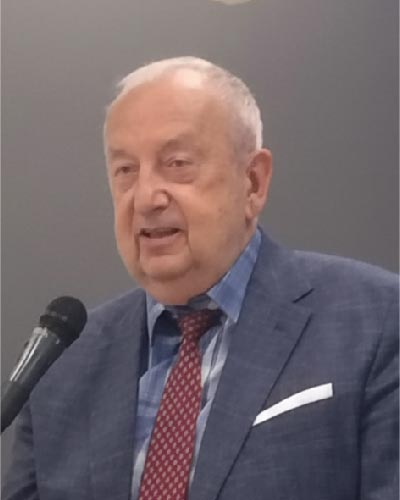
Classical Philosopher Prof. Dr. Igor Kondrashin
President, World Philosophical Forum
World Philosophy Day is an international day proclaimed by UNESCO to be celebrated every 3rd Thursday of November. It was first celebrated on 21 November 2002.
By celebrating World Philosophy Day each year, UNESCO underlines the enduring value of philosophy for the development of human thought, for each culture and for each individual. UNESCO has always been closely linked to philosophy, not speculative or normative philosophy, but critical questioning which enables it to give meaning to life and action in the international context.
In establishing World Philosophy Day in 2002, UNESCO’s General Conference highlighted the importance of this discipline, especially for young people, underlining that “philosophy is a discipline that encourages critical and independent thought and is capable of working towards a better understanding of the world and promoting tolerance and peace”. UNESCO’s General Conference was convinced that “the institutionalisation of Philosophy Day at UNESCO as ‘World Philosophy Day’ would win recognition for and give strong impetus to philosophy and, in particular, to the teaching of philosophy in the world”.
Philosophy has opened the door for new concepts and innovative ideas, laying the foundations of critical thinking, independence and creativity across cultures for many centuries. UNESCO introduced World Philosophy Day to honor philosophical reflections throughout the world by opening spaces and encouraging people to share their philosophical heritage, opening their minds to new ideas, and inspire public debate on society’s challenges.
On World Philosophy Day UNESCO invites us to celebrate the diversity of human thought and to take a philosophical look at the world. Philosophy is not only a thousand-year-old science, nourished by traditions from all over the world; it is a living exercise in questioning and conceiving the world, not only as it is, but also as it could or should be. In order to build a better world, to move towards an ideal of peace, we know that we must adopt a philosophical approach – namely, we must question the shortcomings of our world, accompanied by multiple crises and ongoing military conflicts. Philosophy is therefore essential when it comes to defining the ethical principles that should guide humanity.
In view of the magnitude of contemporary challenges, it is indeed our very conception of humanity that must be reexamined, in order to reflect upon “the human of the coming near future”, about the new generation of Humans, which should substitute the current outgoing generation. This reflection must be open. Open to all eyes, first of all, by measuring in particular, how indigenous philosophies can change the way we look at the world, as well as our way of living in it. Open, also, to all types of knowledge, particularly to other human sciences, in order to grasp the world in all its complexity and to be able to translate reflection into action.
Open, finally, to our societies, because the science of philosophy is not isolated from the world. Everyone must have the tools of philosophy to reinvent a common world, and from the youngest age. This is also the purpose of World Philosophy Day. On this Day, UNESCO as well as WPF On this Day, UNESCO as well as WPF call upon all Humans to start more deep thinking collectively about the coming future of humanity, and to start more actively to construct a better life around you, on the planet Earth as a whole.