
World Philosophy Day
WORLD PHILOSOPHY
DAY 2025
"Navigating a Complex World with Ethical Governance"
Key Highlights
Officiating and Keynote Speech by
Prof. Dr. Igor Kondrashin
President & CEO, World Philosophical Forum
Featuring distinguished speakers and panelists
International thought leaders, policymakers,
academicians & corporate pioneers
WPF University Convocation Ceremony
Grand Dinner & Cultural Performances
ABOUT WORLD PHILOSOPHY DAY
By celebrating World Philosophy Day each year, on the third Thursday of November, UNESCO underlines the enduring value of philosophy for the development of human thought, for each culture and for each individual.
Philosophy is an inspiring discipline as well as an everyday practice that can transform societies. By enabling to discover the diversity of the intellectual currents in the world, philosophy stimulates intercultural dialogue. By awakening minds to the exercise of thinking and the reasoned confrontation of opinions, philosophy helps to build a more tolerant, more respectful society. It thus helps to understand and respond to major contemporary challenges by creating the intellectual conditions for change.
Program Itinerary
Welcome Dinner (19 November 2025)
International Conference on Philosophy & Leadership:
Navigating a Complex World With Ethical Governance
WPF University Convocation Ceremony And Grand Dinner
LEADERs' MESSAGES
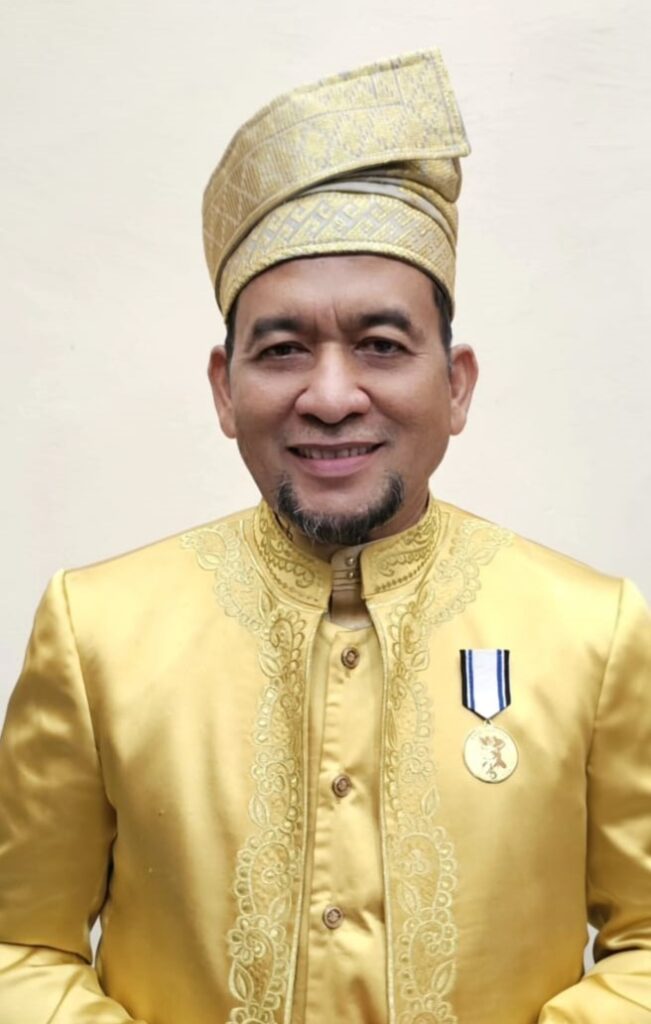
Prof. Dr. Sheikh Sofyan Siroj Abdul Wahab, Ph.D.
Datuk Setya Amanah Dewa Negeri, Batara Saur Darussalam
World Philosophy Day in the Mirror of the Quran: Between National Destruction and the Path to Global Salvation
Bismillahirrahmanirrahim.
Alhamdulillah, prayer and greetings ‘ala Rasulillah, wa bakdu.
World Philosophy Day is a moment for humanity to reflect: where we come from, why we live, and where we will return.
The Quran reminds us in Surah al-Isra’: 16, that the destruction of a nation does not come suddenly, but through a process of moral deviation, elite greed, and the loss of social justice. This is the sunnatullah of history that applies across the ages.
However, the Quran also offers hope. al-A’rāf: 96 emphasizes that faith and piety are the doors to blessings from heaven and earth. This means that global salvation is not only determined by intellectual and material power, but also by spiritual and moral foundations.
So, Qur’anic philosophy is not just a reflection of the mind, but also the wisdom of the heart. He unites reason and conscience, reason and spirituality, to give birth to a civilization that is just, civilized and full of love.
Prayer
Dear Allah,
You are the Most Wise, Rabbul ‘Alamīn.
Make the momentum of World Philosophy Day a turning point in human consciousness.
Guide our minds with the light of Your revelation, straighten our hearts with Your guidance,
and unite our steps on the path of justice and mercy.
Protect the nations from destruction due to injustice, greed and arrogance.
Open the doors of blessings from heaven and earth for those who believe and are pious.
Make us a people who bring rahmatan lil-‘ālamīn, protecting not only humans, but all of Your creation.
Hope
May World Philosophy Day be a reminder that reason without revelation will go astray, and knowledge without faith will give birth to destruction.
Our hope is that all human beings will be able to develop a philosophy of life based on monotheism, justice and universal compassion.
With that, the world will no longer move towards destruction, but towards global salvation—a Qur’anic civilization that brings peace, prosperity and blessings to all.
Core message:
World Philosophy Day should not only be a space for intellectual reflection, but also a spiritual momentum to reset the direction of civilization: from the path of destruction to the path of global salvation in the light of the Qur’an.
So, every leader of every nation or state who lead his people of his nation or state must be wisdom and justice, as what Allah has said through with the holy Qur’an.
The leaders must have good mind set, character, attitude, give good samples to the people, give facilities to the people to effort well as well as their skills and able to develop their competitiveness on good regulation made the leader to be used by them as well as they can get good results of the effort made.
The wealthy must be believed for the right of them on lives daily, weekly, monthly, and on their lives continuously.
At the end but not the last, the education must give chances to the people to get knowledge, skills as what their talent and completely they get.
Allahu ‘Alam.
Thank you very much
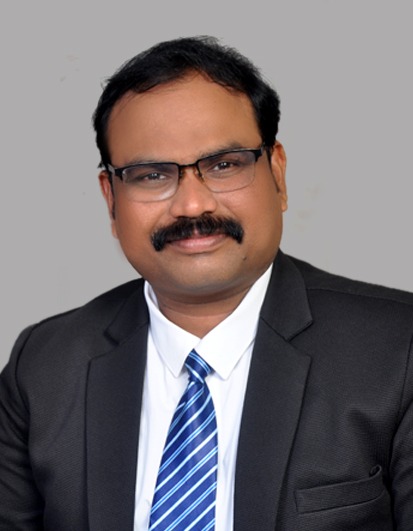
Prof. Dr. Koppula Victor Babu
Head, Indian Branch (WPF-UNESCO) -
World Philosophical Forum
Faculty Member, Department of Philosophy, Andhra University, Visakhapatnam, Andhra Pradesh, India
The Relevance Of Philosophy: M.K.Gandhi, India
Every human being is different – different in Physical appearance, different at Psychological reflection, different in spiritual level of understanding, different in understanding their religious faith. Possessing his unique identity and holds some essential commonalities as a human being. The same formula can be applied to culture and traditions too. They look very different but their purpose and functions are for the good of humanity. For example: take all religions and their traditions, they differ in their metaphysical details but as long as the human life is concerned they uphold more or less similar values and virtues. Every human being needs to understand the essential cultural and traditional values of his own and try to understand the other traditions too.
The progress in transportation and communication that has brought all the peoples of the world into one global village has also brought the cultures, traditions & religions of the world into close contact. The first step toward appreciating other cultures & traditions is to understand each on its own terms. Each culture and tradition has its own moral & spiritual depth. Each gives its own distinctive answers to many of the fundamental questions which trouble human existence.
Especially today when we are surrounded by the forces of darkness, we need a leader like Gandhi, a man of rare courage, character, who dares to tell the truth, who can overcome violence with nonviolence, and who shows us the way to light. Gandhiji principles of satya (truth) and ahimsa (nonviolence) are more relevant today than any other time in human history, and the Gandhian style of satyagraha, moral equivalent of war in these troubled times. Gandhi not only said but showed us the way that, “nonviolence is infinitely superior to violence.
Today, his prophetic words have proven true. Many a leader around the globe have successfully launched their satyagrahas against tyrannical governments, against racial, religious and economic injustice, and fought for human rights.
Today values and meaning of the success are far more different from the values of Gandhiji which he believed and practiced. In today’s India where corruption and apathy are growing like silent epidemics, people are scoffed at and discouraged by other people who try to implement the Gandhi’s principles. Thus, it is not easy to follow them. Today in order to protect ourselves or take advantage over the others we are the choosing the medium of violence which is against the principle of Ahimsa or non-violence. There have been many instances where the people peacefully fighting for their rights have been forced through the violent methods to put their protest to an end. The principles of Non-violence, Simplicity, Truth and Faith are difficult to follow as people have lost the willingness to do so.

Prof. Emeritus Dato' Dr. Sulaiman Md Yassin
WELCOME TO KUALA LUMPUR
On this World Philosophy Day, we come together to celebrate the timeless pursuit of wisdom — a day to remind ourselves of philosophy’s enduring presence, to refresh our understanding of its essence, and to reflect deeply on its purpose in society. Philosophy, at its core, is not a distant or abstract discipline; it is a living guide that shapes our values, sharpens our ethics, and broadens our worldviews.
Through critical inquiry, philosophy challenges us to ask questions that matter, to seek clarity amidst complexity, and to strengthen our decision-making in an ever-changing world. It nurtures in us the courage to think independently while remaining open to dialogue and diversity. In doing so, it reminds us that knowledge is not the possession of a few, but a shared heritage accessible to all.
As partners in shaping change and advancing sustainable development, philosophy empowers societies to uphold checks and balances, ensuring fairness, accountability, and integrity. It educates us not only to understand but also to inspire, to imagine futures where human dignity and justice are at the center. By reflecting on its lessons, we become better stewards of our communities and the world we share.
Rumi once wrote,
“Try to accept the changing seasons of your heart, even as you have always accepted the passing of time. Do not resist; philosophy is the fountain where both questions and answers meet.”
His words remind us that philosophy is not about certainty but about the journey — a journey that connects us across cultures, generations, and dreams.
Today, let us celebrate philosophy as both mirror and compass: a mirror to examine ourselves and a compass to guide humanity toward wisdom, compassion, and sustainable progress.
Congratulations to the World Philosophy Forum (Malaysia) for bringing today’s celebration to life with such success.
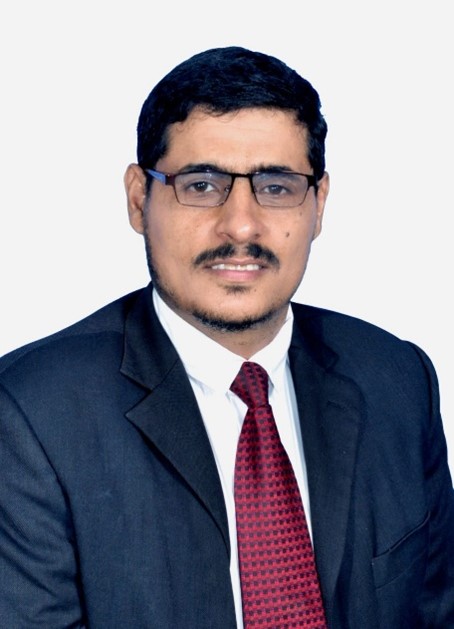
Dr. Ali Saleh Ali AL fakir
Head, World Philosophical Forum – Yemen Branch
Executive Director, Hague International Legal Solutions & Consultancy Center (HILC)
Official Message for World Philosophy Day 2025
On World Philosophy Day 2025, I am deeply honored to extend my reflections on the vital role of philosophy in shaping the future of humanity. Philosophy, as the foundation of critical thinking, ethical reasoning, and human wisdom, provides the intellectual compass by which societies can navigate the complexities of the modern world.
This year’s theme, emphasizing the interconnection between philosophy, good governance, and sustainable development, reminds us that philosophy is not confined to abstract thought, but is a practical guide for human progress. Sound governance requires ethical leadership; ethical leadership, in turn, must be grounded in philosophical inquiry that places justice, dignity, and human values at the center of decision-making.
As we confront global challenges—climate change, inequality, conflict, and cultural fragmentation—philosophy serves as a bridge that unites diverse perspectives, fosters dialogue among civilizations, and inspires solutions rooted in universal principles. In this sense, philosophy becomes not only an academic discipline, but also a shared human responsibility for peace and sustainability.
In alignment with these principles, I am also honored to emphasize that the Hague International Legal Solutions & Consultancy Center (HILC), where I serve as Executive Director, is dedicated to advancing similar goals on a global scale. HILC provides comprehensive legal and research services rooted in universal human values and a deep philosophical vision. Its mission is to balance law, peace, justice, and human belonging by promoting legal peacebuilding, humanitarian justice, climate justice, and sustainable development, while fostering an ethical jurisprudence that unites law with philosophy. Through this vision, HILC seeks to contribute to a more just, inclusive, and sustainable world.
On behalf of the World Philosophical Forum – Yemen Branch, I affirm our commitment to advancing philosophical thought, strengthening ethical governance, and contributing to the global pursuit of sustainable and inclusive development. May this celebration in Kuala Lumpur inspire new pathways of wisdom, cooperation, and human solidarity.